Blogs & Articles

5 Simple Study Habits That Actually Work

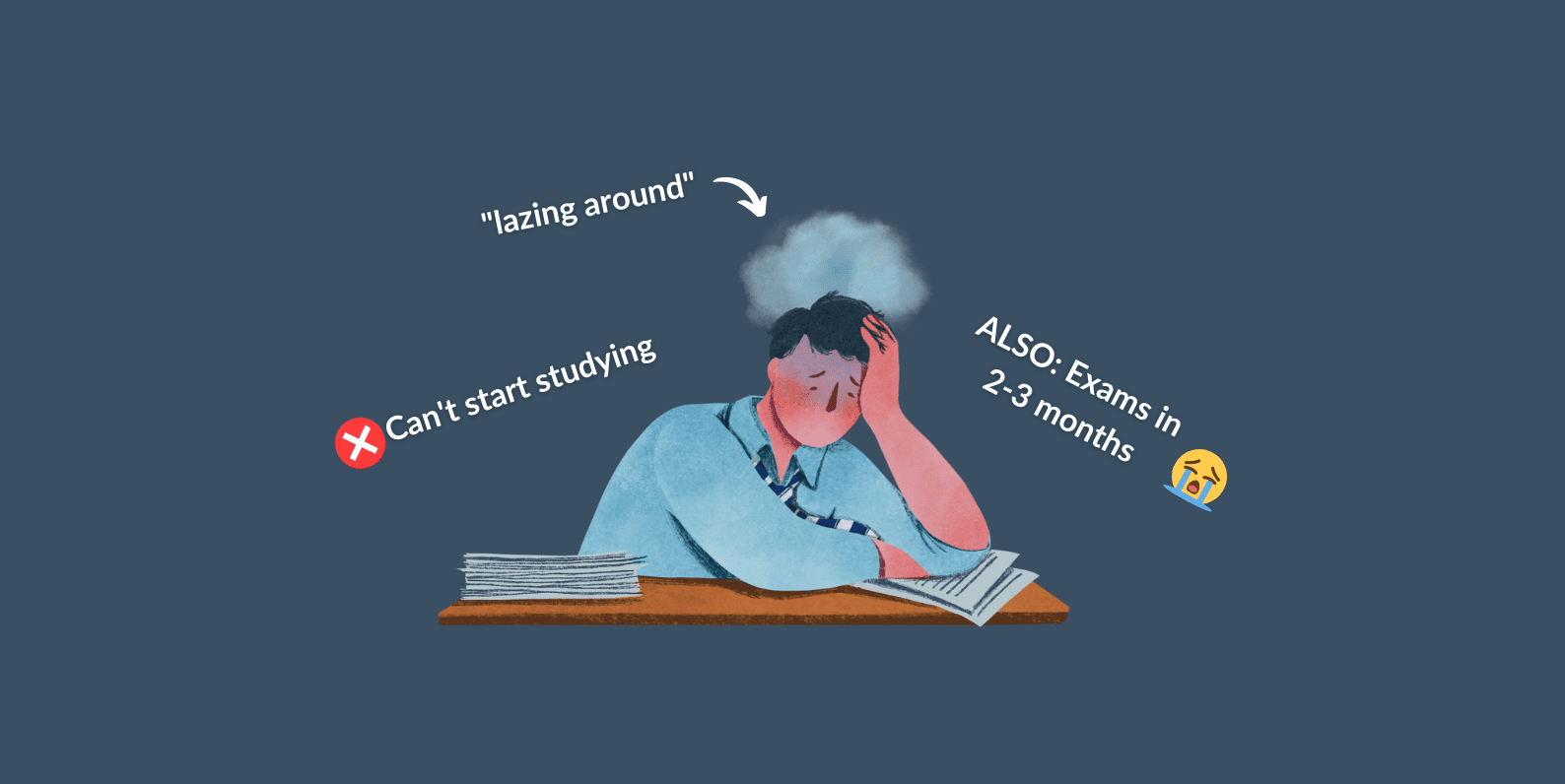
Are you studying for hours but still struggling to remember? The problem might be how you are studying.

Based on cognitive science, these 5 simple methods will help you stop cramming and start retaining information for good.

1. Read to Understand, Not Just to Memorize
Many students try to memorize facts immediately ('surface processing'), remembering words for minutes but forgetting them by tomorrow.

The Fix: Focus on Deep Processing. Understand the 'why' and 'how' behind the concept. If you understand the logic, the memory follows naturally.


2. Mix Up Your Subjects (Interleaving)
Studying one subject for 5 hours straight feels productive, but your brain actually learns better when you mix things up.

The Fix: Break study time into blocks. Do Mathematics for 45 mins, switch to Afrikaans, then go to Science. This forces your brain to 'reload' information, strengthening memory.


3. Pretend to Teach Someone Else (The Protégé Effect)
Research shows that students who expect to teach material work harder to understand it than those just studying for a test.

The Fix: Close your book and pretend you are teaching a classmate. If you stumble or can't explain it simply, you don't know it yet. Review that gap.


4. The 'Blurting' Method (Active Recall)
Reading notes over and over is passive and often ineffective. You need to pull information out of your brain, not just stuff it in.

The Fix: Use Active Recall:

  • Read a section.
  • Put your books away completely.
  • Write down everything you remember on a blank paper ('Blurting').
  • Open your book and check what you missed.

5. Study in Sections (Spaced Repetition)
Cramming is a disaster because your brain needs sleep to move info from short-term to long-term memory.

The Fix: Spread studying over days. Reviewing a topic 3 times for 30 minutes over a week is far better than once for 90 minutes.

Bonus: The Biological Essentials
💤 Sleep: Sleep is when your brain 'saves' what you learned. Pulling an all-nighter wipes out that day's memory.
🏃 Exercise: A quick walk releases BDNF (brain fertilizer), which grows new connections and improves focus.

Struggling with focus? Contact us for study skills assistance.

How Consistent Tutoring Builds Unshakable Confidence

Confidence is not a trait you are born with; it is a skill that is built.

Science tells us a fascinating story: consistent support does more than improve grades - it physically rewires the brain to reduce fear and build resilience.

1. Rewiring the Brain’s 'Fear Circuit'
For a struggling student, difficult work triggers the amygdala (the 'fear center'), sending the brain into 'fight or flight' mode and shutting down logic.

The Fix: Tutoring acts as 'exposure therapy.' By facing fears in a safe environment, the amygdala calms down. The brain learns the 'threat' is manageable, freeing up energy for learning.


2. The Compound Effect (Consistency > Intensity)
Many students try to 'cram' confidence right before an exam. But just like the gym, you cannot build resilience in a single 10-hour session.

The Fix: We rely on Spaced Repetition. Knowing they have a set time every week to tackle difficult concepts gives students a psychological 'safety valve,' reducing daily anxiety.


3. The 'Classroom Safety Net'
In a class of 30, the social cost of making a mistake is high. Students stay silent to avoid judgment, which kills curiosity.

The Fix: Private tutoring creates Psychological Safety. The fear of public failure is removed. Students are free to ask 'silly' questions, which is the fastest way to master new material.


4. The 'Identity Shift'
Struggling students often have a fixed narrative: 'I am not a math person.' This becomes a self-fulfilling prophecy.

The Fix: Through Mastery Experiences, we force an identity shift. When a student solves a problem they thought was impossible, 'I can't' changes to 'I just did.'

5. Our Philosophy: The 'Academic Personal Trainer'

We don't view tutoring as a mechanic fixing a broken car. We view it as Personal Training for the brain.

  • Proactive: We don't wait for 'injuries' (bad grades); we train to get strong.
  • Muscle Memory: We build habits so students perform automatically under pressure.
  • The Spotter: Like a weightlifter, a student needs a spotter to help them lift heavier weights safely.

Want to build this kind of confidence? Get started today.

Studying for Exams Without A Burnout

Pushing your body to the brink doesn't improve grades - it destroys retention.

Exam season often feels like a survival contest. But research is clear: pushing yourself to exhaustion is called Academic Burnout, an 'occupational phenomenon' recognized by the WHO.

1. Space Out Your Study (Don't Cram)
Cramming is the enemy of memory. When you try to learn everything in one night, you rely on short-term memory, which fades almost instantly.

The Fix: Use Distributed Practice. Studying for 1 hour a day for 7 days is far better than 7 hours in one day. This signals to your brain that the info is important, moving it to long-term storage.


2. Take 'Real' Breaks (The 50/10 Rule)
Your brain stops absorbing information after about 45–50 minutes due to 'diminishing returns.'

The Fix: Work in pulses. Study for 50 minutes, then take a 10-minute break.

  • Good Break: Walking, stretching, grabbing a snack, or staring out a window.
  • Bad Break: Scrolling social media. This prevents your brain from 'resetting' because it is still processing data.

3. Active Recovery vs. Passive Rest
When exhausted, your instinct is to lie on the couch. While rest is good, simple inactivity doesn't always clear brain fog.

The Fix: Move your body (Active Recovery). A 10-minute walk pumps oxygen to the brain and clears stress hormones. It’s like hitting 'refresh' on your browser.


4. Sleep Is Part of Studying
Sleep isn't a waste of time; it is when your brain actually learns. During deep sleep, your brain consolidates what you read.

The Fix: Treat 8 hours of sleep as a non-negotiable study task. Cutting sleep to study is like typing a document but forgetting to hit 'save.'


5. Set Boundaries (Learn to Say No)
Burnout often comes from trying to balance socializing, sports, family, and exams all at once.

The Fix: Practice Strategic Unavailability. It is okay to say 'no' to events during exam blocks. Protect your energy.

The Bottom Line: You are not a robot.

You cannot run an engine at max speed without fuel and maintenance. Space out your work, sleep well, and you will walk into the exam hall confident, not crushed.

Feeling burnt out? Request a call back for support.

NSC vs. ASC: The Difference Explained

Comparison of School Matric vs Adult Matric.

In South Africa, the terminology around 'Matric' can be confusing. NSC vs ASC: Are they the same? Do universities accept both? Which one is for me?

The short answer is: Both are recognized Matric qualifications, but they are designed for different types of learners. Here is the simple breakdown.

1. The National Senior Certificate (NSC)
This is the standard 'School Matric.' It is the qualification you work towards when you are in a traditional high school environment (Grade 10–12).

  • Who is it for? Learners under the age of 21.
  • The Structure: You must take 7 subjects, including Life Orientation.
  • How you pass: Your final mark is a combination. 25% comes from your School-Based Assessments (SBA) - class tests and assignments. 75% comes from the final exam.

2. The Amended Senior Certificate (ASC)
This is often called the 'Adult Matric.' It is designed for people who have left the school system but still want to get their Matric.

  • Who is it for? Learners 21 years and older.
  • The Structure: You only need to write 6 subjects. Life Orientation is not required.
  • How you pass: This is the biggest difference. Your mark is 100% based on the final exam. There are no class tests or assignments (SBA). This makes it ideal for working adults.

3. The 'Matric Statement' Loophole
A common misconception is that if you failed Matric previously, you have to start over. This is not true. If you have a Statement of Results, you have credits.

The Fix: You can use that Statement of Results to register for the ASC. You do not need to go back to Grade 10. You can simply register to rewrite specific subjects or pick new ones. Your previous credits can often be combined with your new ASC results.


4. Do Universities Accept the ASC?
Yes. There is a myth that the Adult Matric is 'worth less.' In reality, Umalusi issues both certificates.

Universities view the ASC and NSC as holding the same value. If you pass your ASC with a 'Bachelor's Pass,' you are eligible to apply for university degree programs, just like a student fresh out of high school.

Summary: Which One Should You Choose?
FeatureNSC (School)ASC (Adult)
AgeUnder 2121 and older
Subjects7 (Inc. LO)6 (Excludes LO)
AssessmentExam + Class Marks (SBA)100% Exam Mark
UniversityYesYes

If you are over 21 and sitting with a Matric Statement that doesn't get you where you want to go, the ASC is your second chance to focus purely on exams without the stress of continuous assessments.

Need help rewriting? Contact us for ASC support.