
5 Simple Study Habits That Actually Work
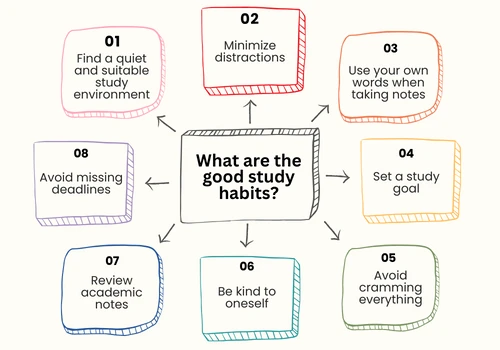
Studying for a long time does not always tell you how much you understand. Try these practical habits, then check your progress with questions you can answer without looking at your notes.
1. Understand the idea before memorising it
Start by asking what the topic means and why a method works. In Mathematics, explain why each step is allowed. In a theory subject, explain the idea in your own words before learning the important terms.
Try this: Read a short section, close the book and explain it aloud. Reopen the notes to check anything you could not explain accurately.
2. Practise choosing the right method
First practise a new skill with a few similar examples. Once you understand it, try a mixed set of questions. This gives you practice deciding which method is needed, as you would in a test.
Try this: After practising one type of algebra question, mix it with questions from earlier work. Write down what helped you recognise the method.
3. Explain a worked example
Teaching an idea to a classmate, family member or imaginary listener can show where your explanation is incomplete. You do not need a perfect speech. The useful part is noticing which steps you cannot yet explain.
Try this: Explain one example without copying the memo. Then compare your explanation with your textbook or teacher’s method.
4. Recall, check and correct
Instead of only rereading, write down what you remember or attempt a question with your notes closed. Check your answer afterwards. Correct the error and try a similar question so you practise the corrected method.
- Choose one small topic.
- Put away your notes and attempt the task.
- Check your answer against a reliable solution.
- Write a short note explaining the mistake.
5. Return to the topic over several days
Plan more than one opportunity to revisit important work. Start with a manageable session, then return later for another short practice. Adjust the gaps and session length to your workload and what you can remember.
Try this: Keep a list of questions you got wrong and attempt them again later without looking at the correction first.
Make the routine manageable
Choose a quiet place where possible, reduce distractions, set one clear goal and keep track of deadlines. Leave time for rest and a regular sleep routine. A difficult day does not mean that you cannot learn the subject.